
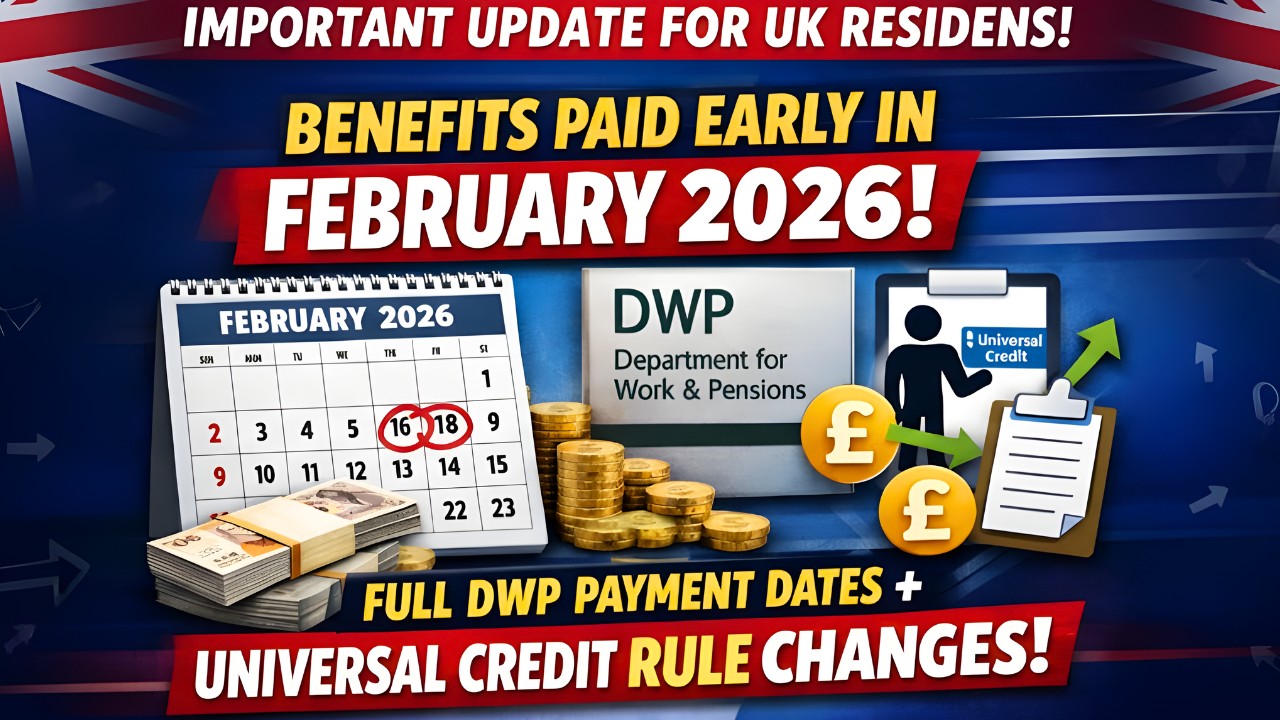
DWP Payment Dates: As February 2026 approaches, many people across the UK are asking whether their benefits will be paid early and what changes might affect Universal Credit and other Department for Work and Pensions (DWP) payments. This question comes up every year, particularly when bank holidays or policy updates are expected. While benefit payments are generally predictable, certain dates and rule changes can cause confusion if you are not prepared.
This article explains why some benefits may be paid early in February 2026, how DWP payment dates usually work, and what claimants should know about possible Universal Credit rule changes.
Why Some Benefits May Be Paid Early in February 2026
DWP benefit payments are usually made on fixed dates, but when a scheduled payment falls on a weekend or a bank holiday, the payment is often made earlier. February itself does not contain many public holidays, but payment schedules can still be affected depending on individual circumstances and local banking arrangements.
If a payment date falls on a Saturday or Sunday, DWP typically issues the payment on the previous working day, usually a Friday. This early payment is not extra money; it is simply the same benefit paid sooner to ensure claimants are not left without funds during non-banking days.
People who rely on benefits for rent, utilities, and food often notice these early payments and worry they are receiving a bonus or that their next payment will be delayed. In reality, the overall payment cycle remains the same.

Full Overview of DWP Payment Types in February
Several major benefits are paid by the DWP, and each follows its own schedule. Universal Credit is paid monthly, while others such as Personal Independence Payment, Attendance Allowance, and State Pension are usually paid every four weeks.
For Universal Credit claimants, payments depend on the assessment period rather than a fixed calendar date. This means two people receiving Universal Credit may be paid on completely different days in February. If a payment date falls on a weekend, it is generally paid on the working day before.
State Pension payments are made every four weeks, based on the recipient’s National Insurance number. Some pensioners may notice an early February payment if their normal date lands on a weekend.
Other benefits such as Disability Living Allowance, Carer’s Allowance, and Employment and Support Allowance also follow four-week cycles, and the same early payment rule applies.

Will an Early Payment Affect the Next One?
A common concern among claimants is whether receiving a benefit early will cause problems later in the month. The answer is no, but it does require careful budgeting.
An early payment does not reset or shorten your next payment cycle. For example, if you normally receive a payment on a Monday but it is paid on the Friday before, your next payment will still be due on the usual date. This can create a longer gap between payments, which can be challenging for households on tight budgets.
Understanding this timing is important, especially in February, which is already a shorter month.
Universal Credit Rule Changes to Watch in 2026
Alongside payment timing questions, many claimants are also concerned about Universal Credit rule changes expected around 2026. Universal Credit continues to evolve, and adjustments are often made to reflect economic conditions, employment patterns, and government policy priorities.

One area that may see changes is work-related requirements. Claimants who are able to work may face updated expectations around job searching, training, or work preparation. These requirements can vary depending on age, health, and caring responsibilities.
Another area to watch is housing support. Changes to Local Housing Allowance rates or eligibility rules can affect how much help claimants receive with rent. Even small adjustments can have a noticeable impact on monthly payments.
Cost of Living Support and Adjustments
Although no automatic bonuses are built into Universal Credit, payment rates are sometimes adjusted annually to reflect inflation or rising living costs. These changes are usually applied in April rather than February, but announcements often happen earlier in the year.
If rates increase later in 2026, February payments would still be based on the previous rate. This can lead to confusion, as some people expect increases to take effect immediately after announcements.

It is also important to remember that cost of living payments, when they exist, are separate from regular benefit payments and are only issued when officially announced.
What Claimants Should Do to Stay Prepared
The best way to stay prepared for February 2026 payments is to know your usual payment date and understand how weekends affect it. Keeping track of your payment cycle can help prevent unnecessary stress.
Claimants should also regularly check their Universal Credit online journal and letters from the DWP. Any changes to rules, payment amounts, or responsibilities are normally communicated there first.
If you are unsure about your payment date or think a payment is missing, contacting DWP directly is better than relying on social media or unofficial sources, which often spread incorrect information.

Managing Money Around Early Payments
When a payment arrives early, it can feel like extra money, but it must last longer. Planning ahead by setting aside funds for essential bills can help avoid financial difficulties later in the month.
Some people find it useful to treat the early payment as if it arrived on the original date, spreading spending across the full period. This approach can reduce the risk of running out of money before the next payment.
Final Thoughts
While some benefits may be paid early in February 2026 due to weekends, there is no indication of automatic extra payments simply because of the month. Universal Credit and other DWP benefits will continue to follow their usual rules, with any early payments being a matter of timing, not increased support.
Staying informed, checking official communications, and planning ahead are the best ways to manage your benefits smoothly. As always, any confirmed rule changes or payment updates will be announced by the DWP through official channels, so it is important to rely on those sources rather than rumours.